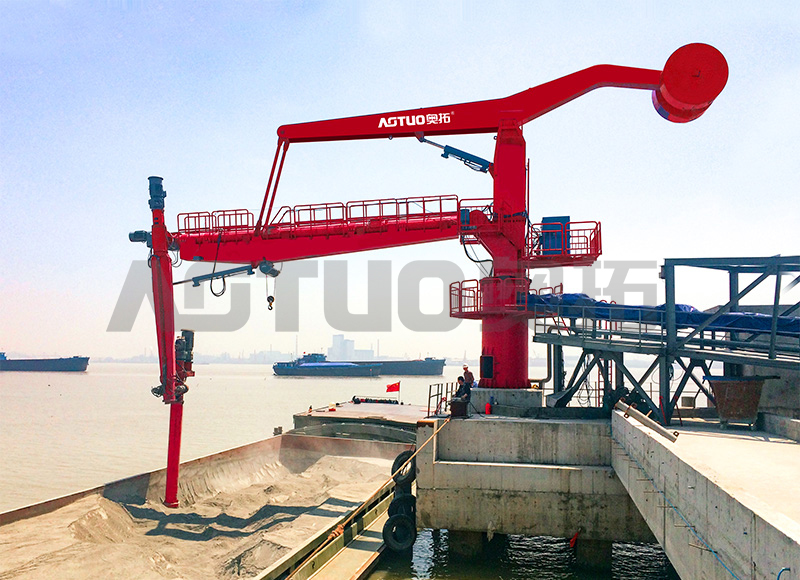
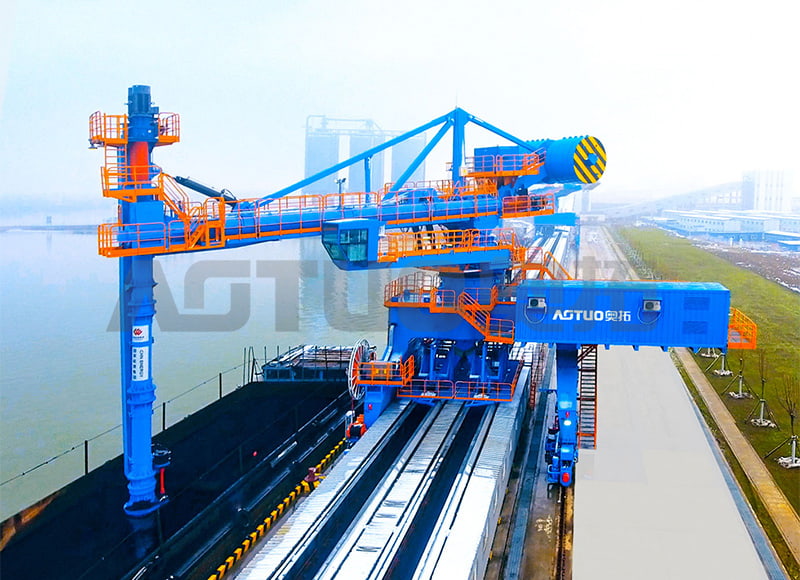
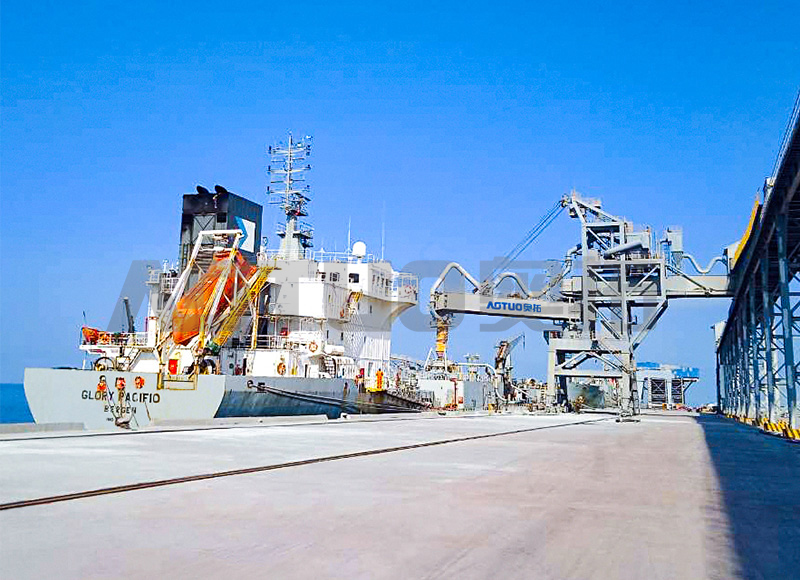
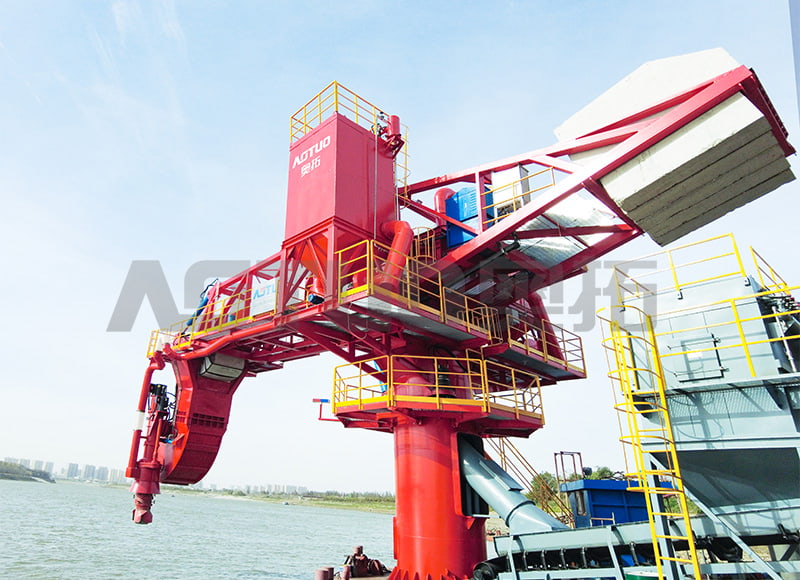
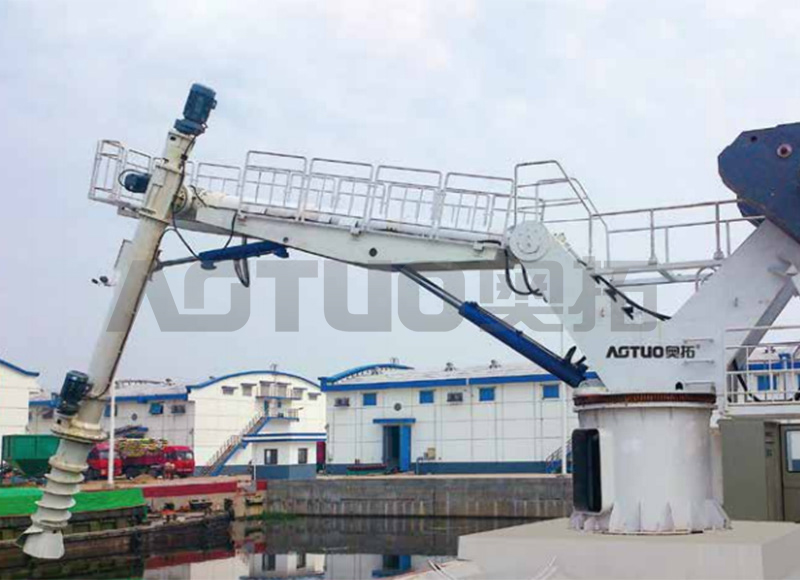
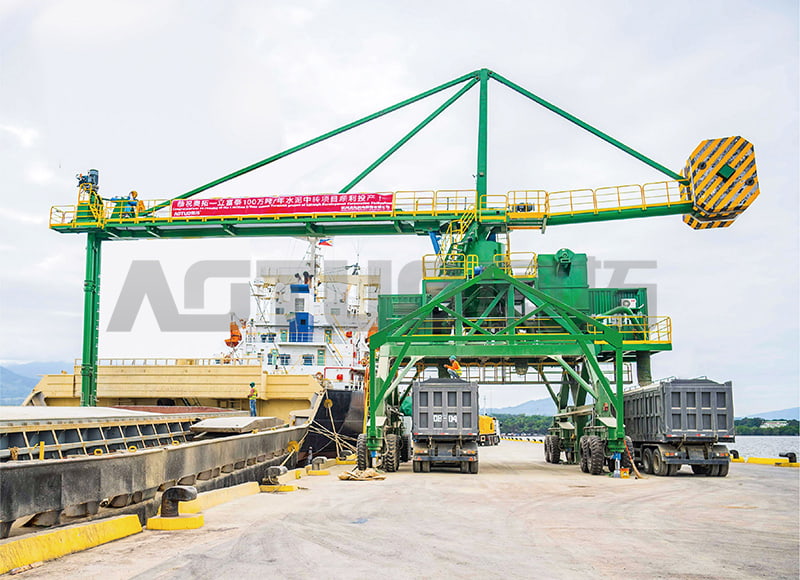
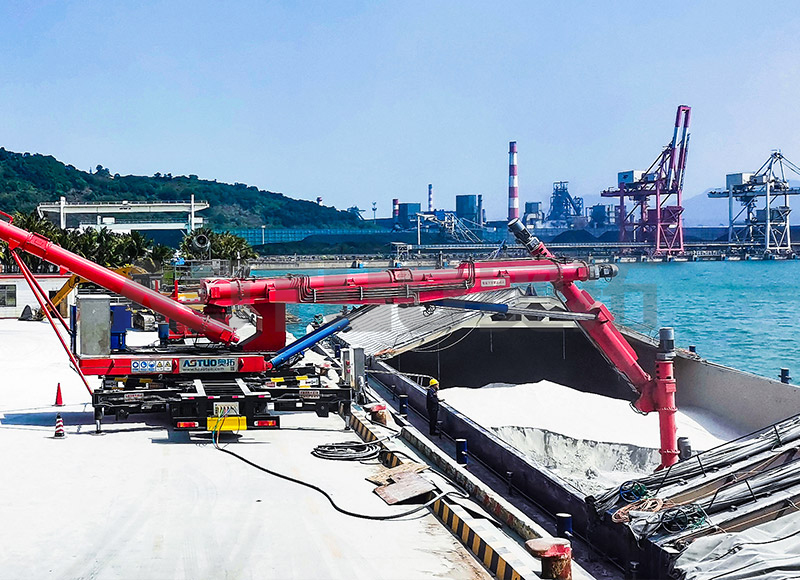
A travelling ship loader is the machine that lets a bulk terminal keep pace with modern vessel sizes. By moving along rails at the berth instead of staying fixed in one position, it can reach multiple hatches and loading points without repositioning the ship, cutting hours off a turnaround that would otherwise depend on slower, stationary equipment.
A travelling ship loader is a large mechanical loading system mounted on rails, built to move horizontally along a quay while transferring dry bulk cargo from conveyors or storage yards directly into a vessel's hold. It is used to load coal, iron ore, grain, fertilizer, cement, and similar bulk commodities at ports and mining export terminals worldwide.
Unlike a fixed ship loader, a travelling model repositions itself along the berth, giving one machine the reach of several stationary units.
Bulk material is fed in by conveyor belt from the stockyard or plant.
Material enters the ship loader's intake and feeding system.
The boom conveyor carries material out over the vessel.
The loading chute distributes cargo evenly into the hold.
The loader travels along the rail to the next loading point.
Travelling ship loaders serve two overlapping but distinct markets: commercial port terminals handling mixed commodities, and mining operations exporting a single material at very high volume.
Port Terminals
Mining Terminals
1
Machine can replace several fixed loaders along one berth
24/7
Capable of continuous operation at high-volume terminals
-
Reduced vessel waiting and turnaround time at the dock
Beyond flexibility, a travelling ship loader improves loading accuracy through luffing and slewing systems that adjust boom height and reach, and most modern units integrate dust control equipment and remote monitoring for safer, cleaner operation.
Selecting the right system starts with the cargo itself, then works outward to the terminal's layout and automation needs.
| Selection Factor | What to Evaluate |
| Material type | Density, particle size, moisture content, and flow behavior |
| Loading capacity | Required tons per hour against typical vessel size |
| Port layout | Rail distance, wharf structure, and ship positioning |
| Automation level | Remote operation, automatic positioning, digital monitoring |
| Environmental needs | Dust suppression, noise control, and energy efficiency |
Key Takeaway
A travelling ship loader gives ports and mining terminals the flexibility to serve multiple berths and vessel sizes with one high-capacity machine, making it a core piece of equipment wherever large volumes of dry bulk cargo need to move efficiently from land to sea.
Es konzentriert sich auf die Gesamtlösung des Trockenmaterial -Porttransfersystems.
Forschung und Entwicklung, Fertigung und Service
Copyright © Hangzhou Aotuo Mechanical and Electrical Co., Ltd. All Rights Reserved. Hersteller .